
Parish Church of St George in Mozirje
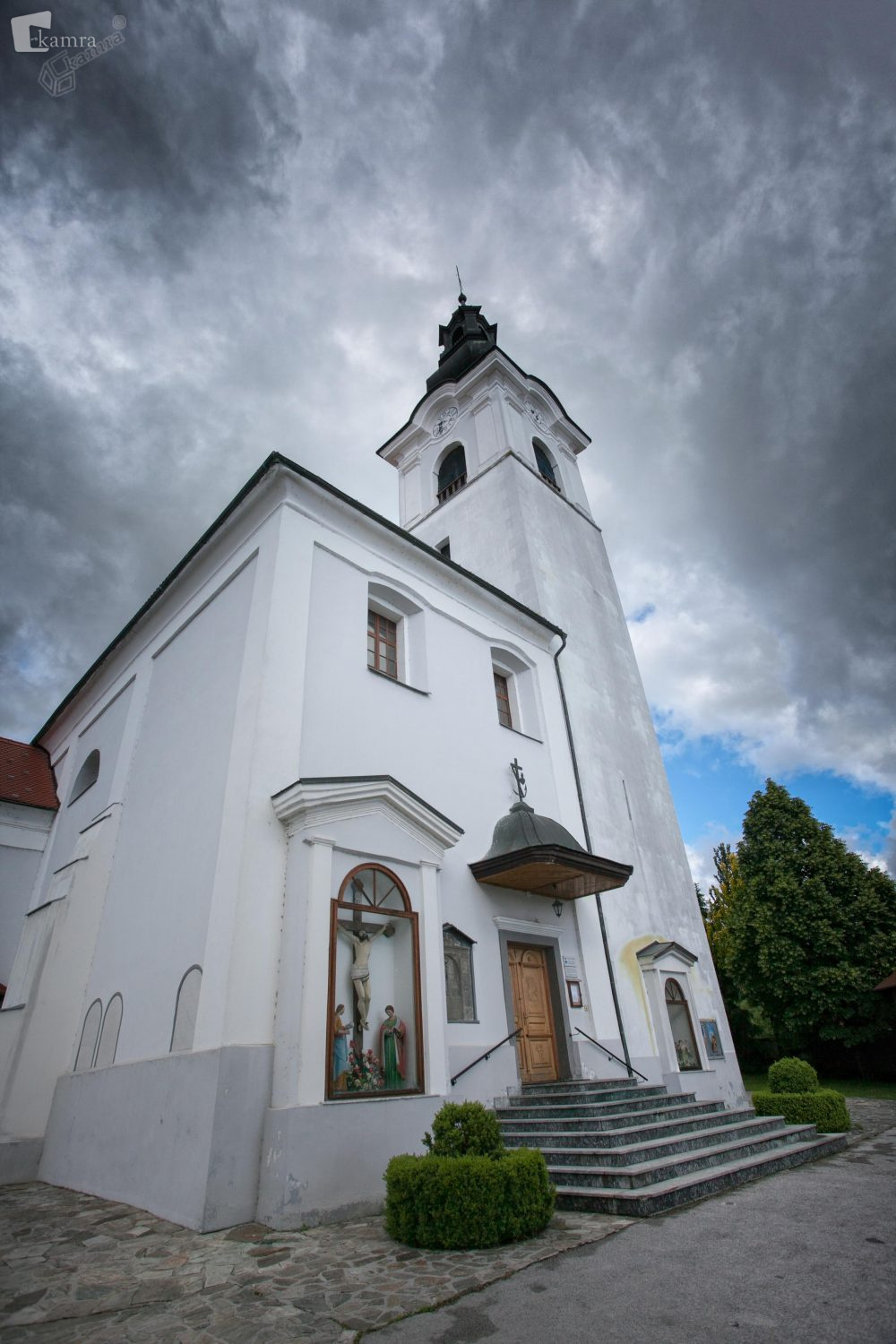
The dominant building of the Mozirje market square is the Parish Church of St George, first mentioned in 1241. According to some historians, the church may have been built as early as the 12th century, during the period of the first Christianisations. In his Chronicle of the Mozirje Market Town (Nova doba, 1926), Žiga Laykauf suggests that a chapel of St George already existed on this site. In 1241 it was mentioned in a charter of Count Wilhelm von Heunburg, who handed the chapel over to the Benedictine abbey in Gornji Grad.
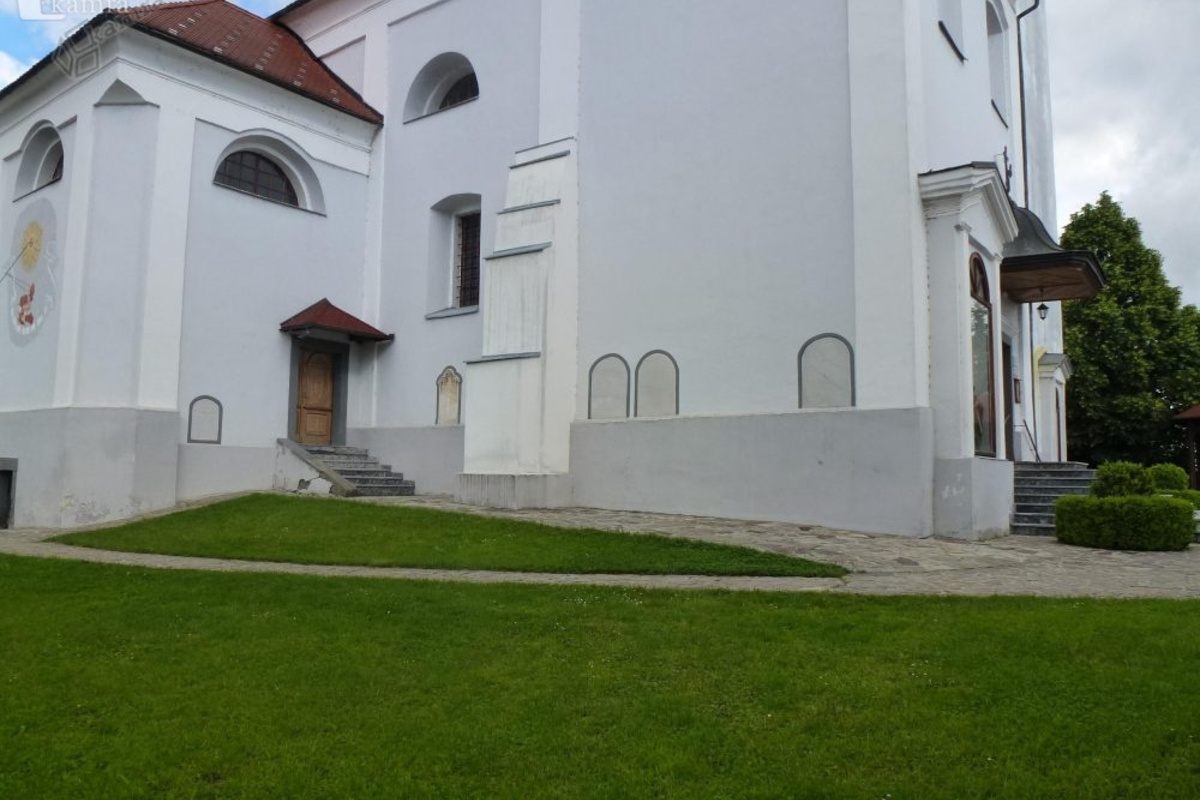
According to a visitation record from 1631, the church had four altars, a sacristy and a strong defensive wall that was meant to provide protection against Turkish raids. The fortified entrance was surrounded by a chaplaincy, which later became the first parish school. In the mid-16th century, a solid wall was added that enclosed the cemetery. On the southern part of the churchyard there once stood a round tower in which human bones were stored.
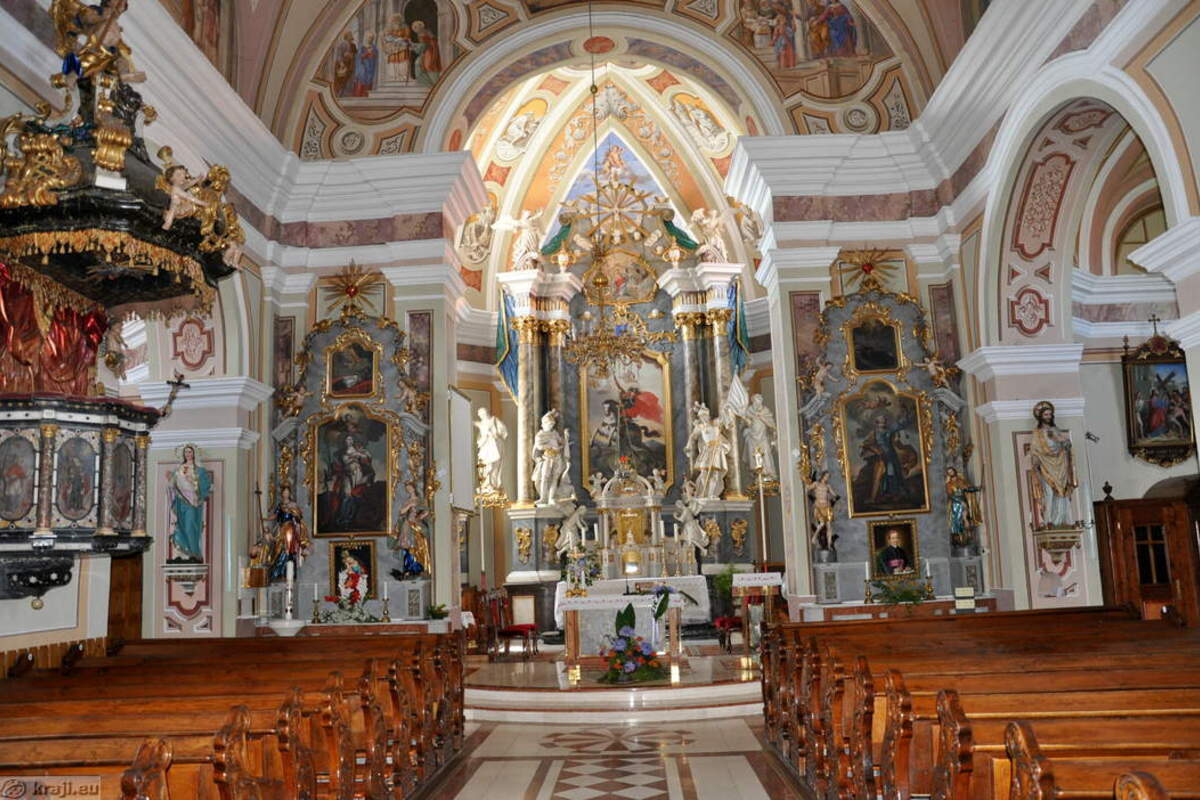
Over the centuries the church was renovated several times. In 1500 the bell tower was built, reaching its present height in 1886. The main altar from 1758, together with the two side altars from 1890, is the work of the local woodcarver Ivan Cesar. The church acquired its final appearance in 1754, when it was enlarged and renovated in the Baroque style.
During the renovation of the bell tower, chronicles of the Mozirje market town were discovered, written by Franjo Vajd in 1924, by parish priest Josip Žehelj in 1887 and by mayor Anton Goričar. The chronicles are not preserved in their entirety due to the ageing of the paper, but they offer insight into the history of the market town.
On the parsonage there is a memorial plaque dedicated to Ignac Orožen, the long-serving Mozirje parish priest and historian, who in the chronicle mentioned the first priest, Ludovicus, as early as 1291.