Velenje Castle
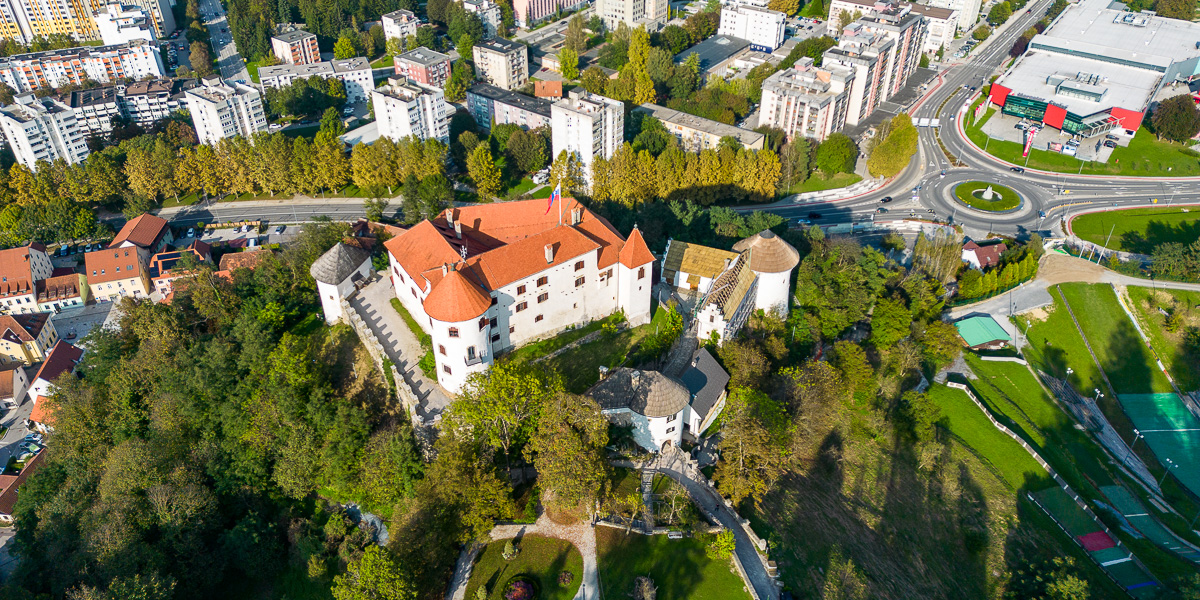
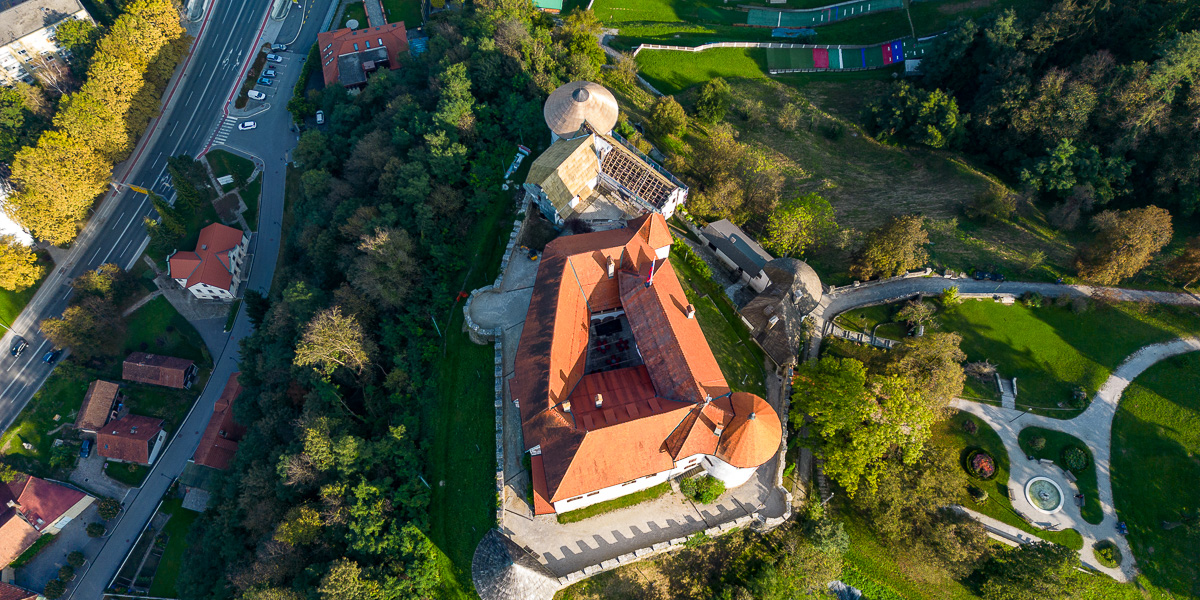
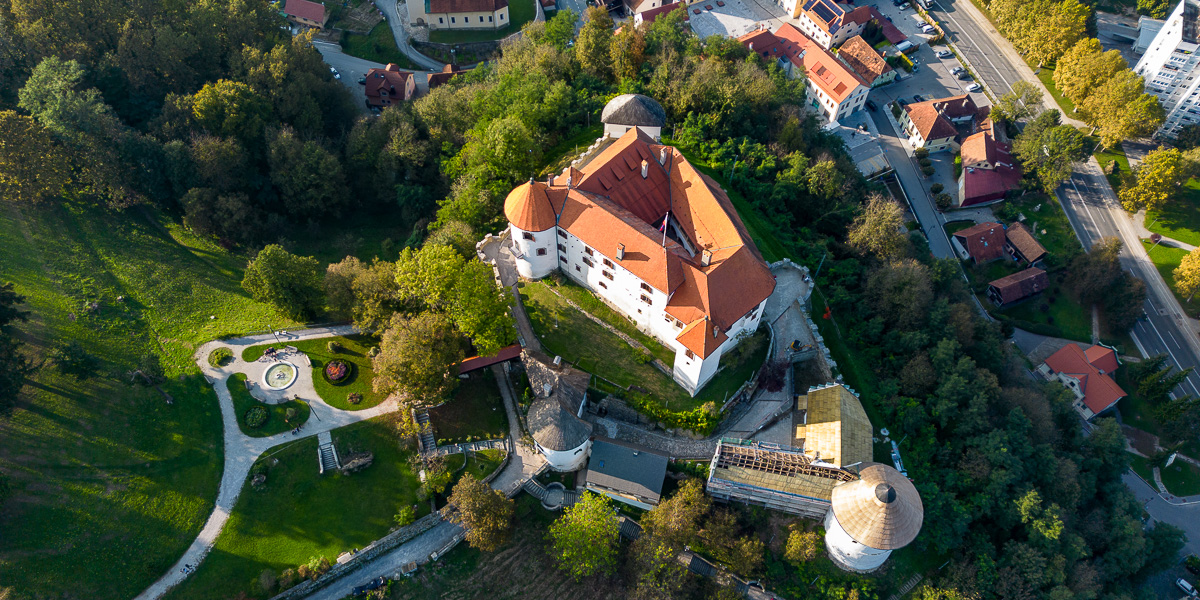
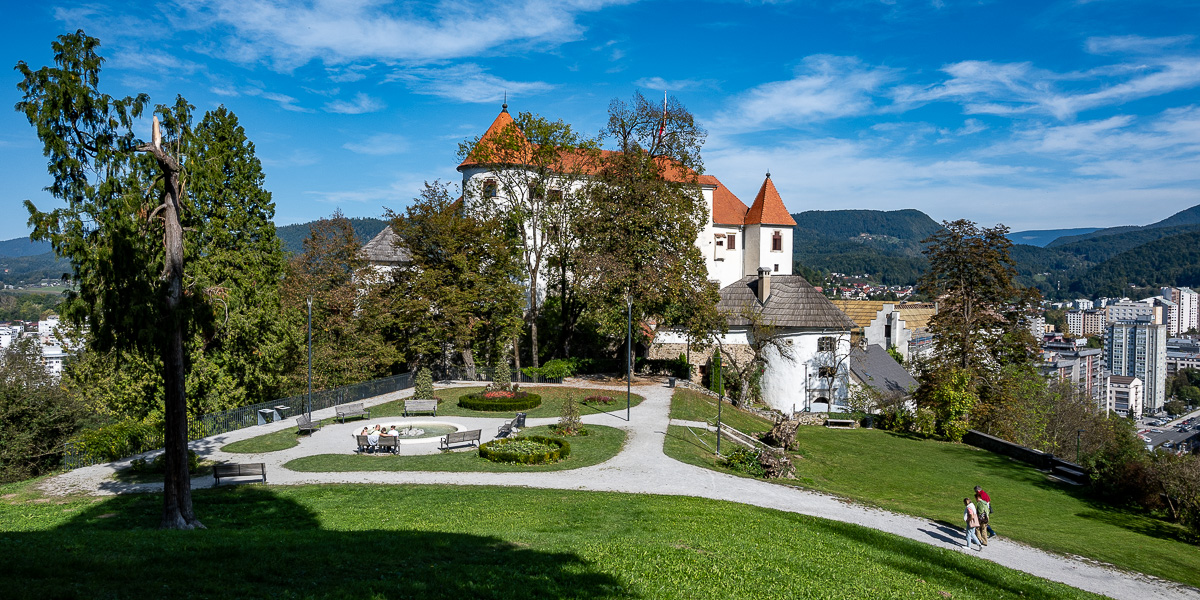
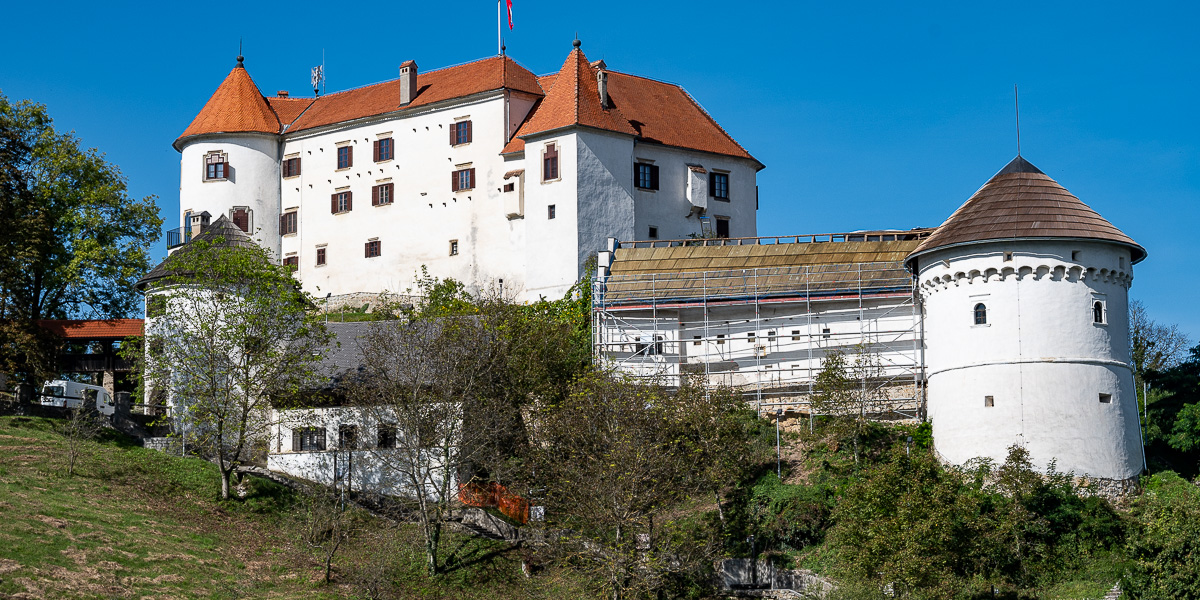
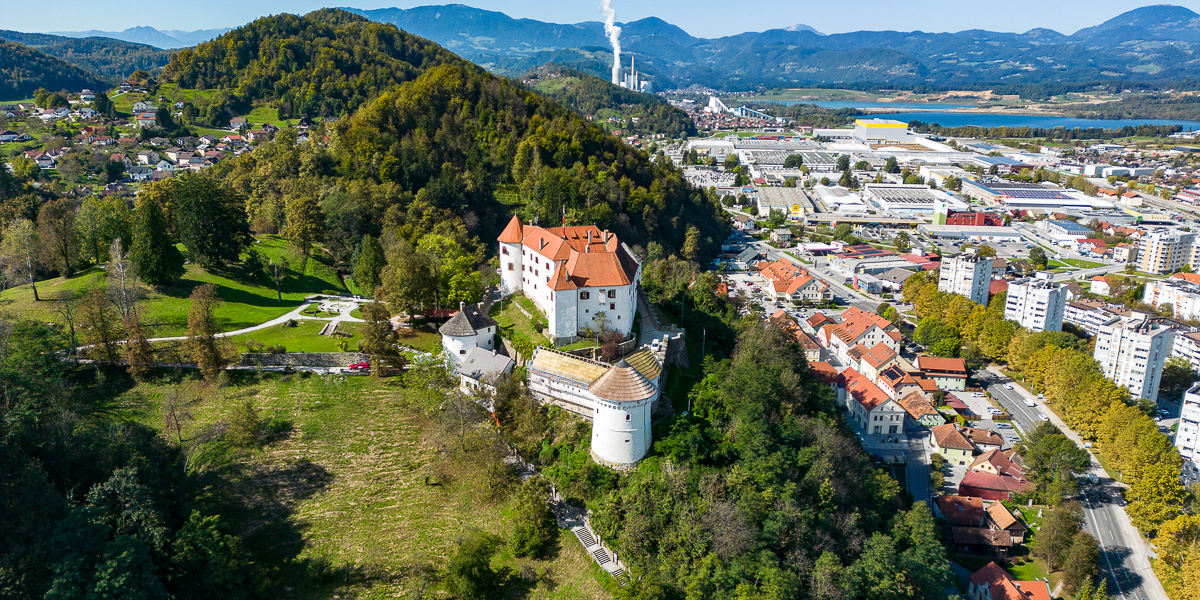
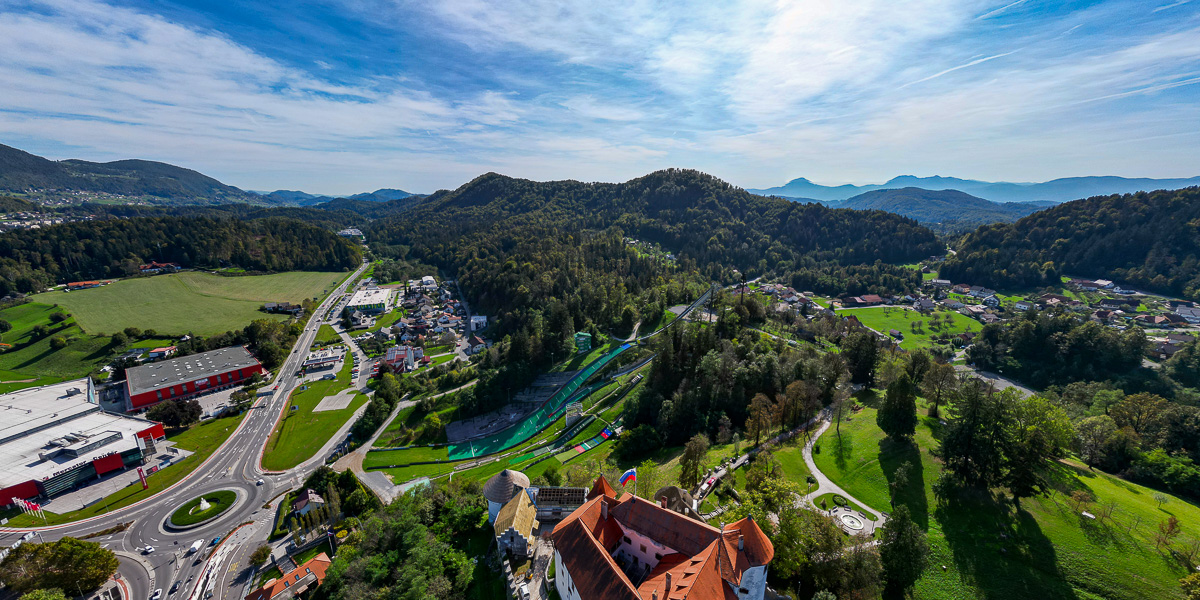
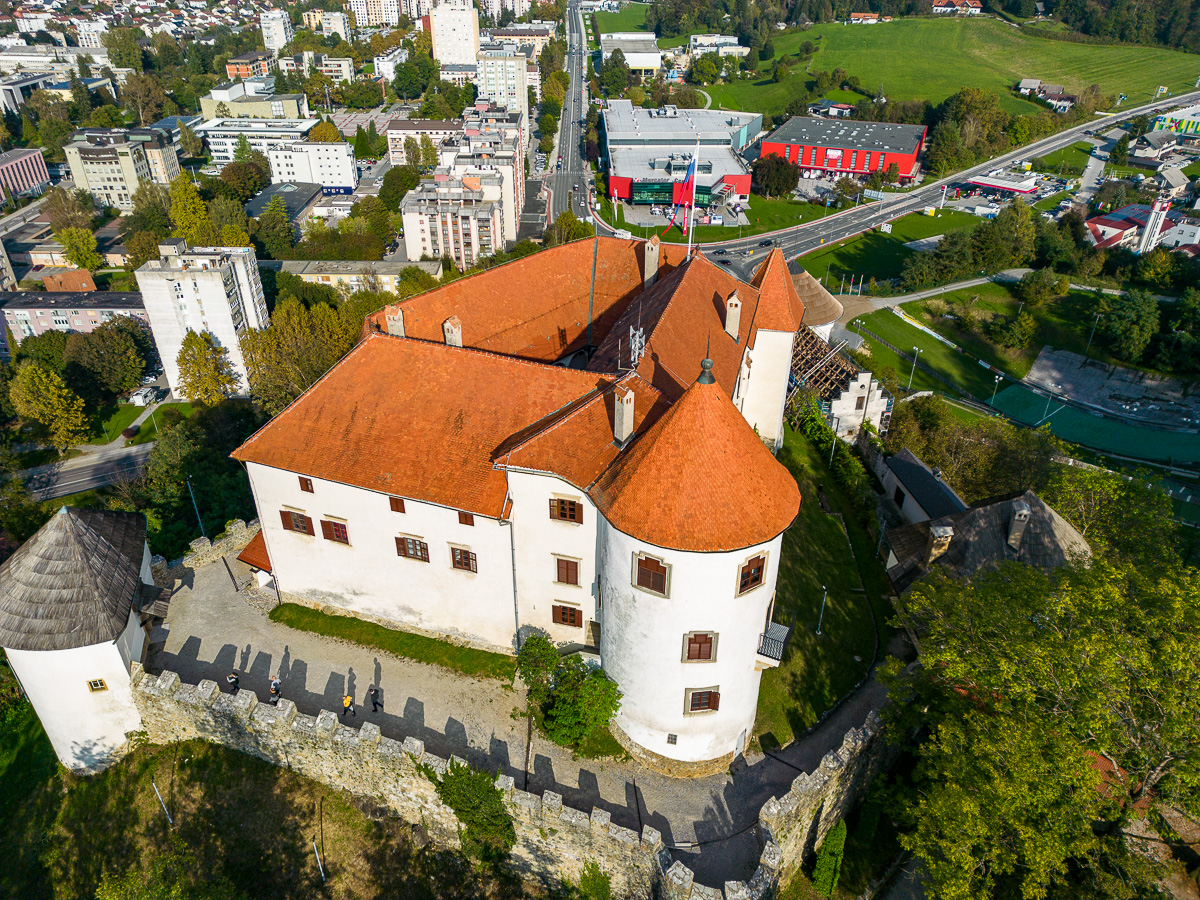 Velenje Castle is one of the best-preserved castles in Slovenia. It is first mentioned in written sources in 1270. Today it has the form of a typical military-residential fortress. Over the centuries the castle was extended and rebuilt, and it acquired its present appearance as a Renaissance manor in the 16th century. The mighty rondel in the south-eastern part of the castle complex is entirely Renaissance. Stylistically and chronologically it is defined by the Renaissance windows on the first floor, the prominent stone stick-shaped cornice, the characteristically shaped pitch spouts and the typical rectangular loopholes or embrasures. Windows of exactly the same shape as those on the rondel can be seen on the courtyard side of the southern wing of the palatium. The typical profile shown by the Renaissance windows is also found on the portal in the entrance tower. Although the architectural appearance of the castle has been preserved in its entirety, with the exception of the drawbridge that was removed in the mid-19th century, unfortunately almost nothing of the interior furnishings has survived.
The first owners of the castle were the lords of Kunšperk, who were followed in the 14th century by their relatives the lords of Ptuj, after which the castle frequently changed owners. In the second half of the 15th century the Lichtenberg family lived at the castle, and through marriage the castle passed in the 16th century into the hands of the Wagen zu Wagensberg family. Both families were involved in Lutheran activity in the Saleska Valley. In the time of the Wagens the castle also underwent its largest reconstructions, which gave the castle its present appearance as a Renaissance castle with a rondel. The flag in the castle courtyard commemorates the Counts Wagen. The reconstructions were completed by the Sauer family.
After them the castle was owned by representatives of the lower official nobility, in the mid-19th century for a short time by the de la Fontaine d'Harnoncourt-Unverzagt family, then by the Adamovich de Csepin family. Karel I. Adamovich de Csepin, a provincial deputy, and his wife Bianca were well-known Velenje benefactors, and after Bianca the Villa Bianca, well known to locals, is named, as the manor built in the mid-19th century in today's Stari Velenje is now called. The family is represented by a coat of arms built into the southern wall of the palatium in the castle courtyard. In 1918 the family sold the castle to their relatives, the Italian noble family Coronini-Cromberg from Gorizia, who were the last owners of the castle... More in the link...
Source: Velenje Museum