The Sundial
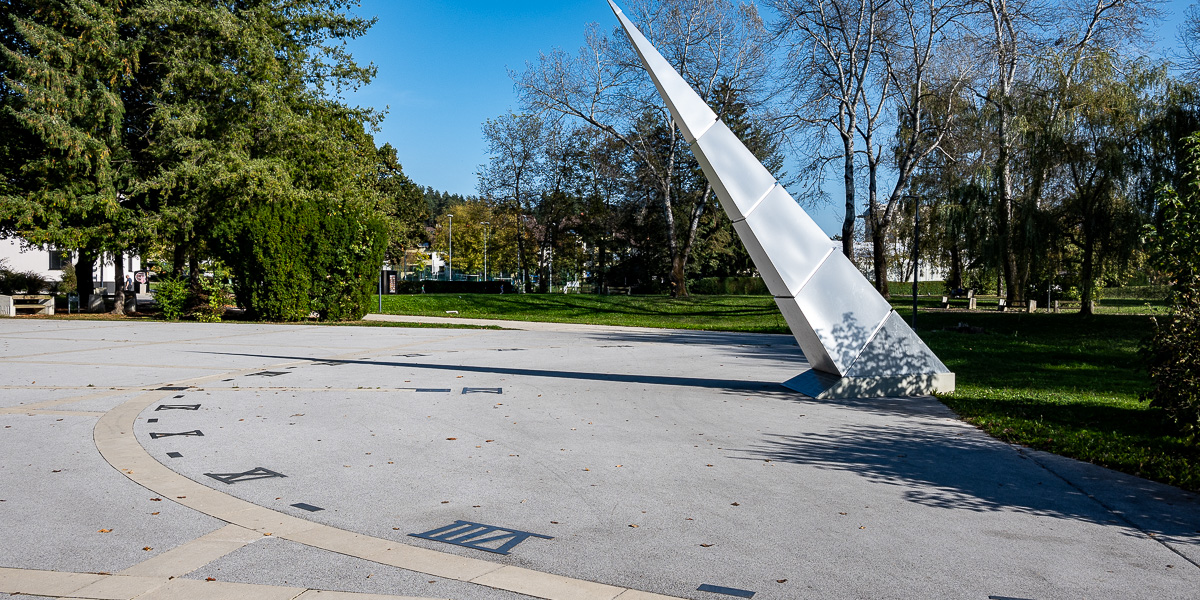
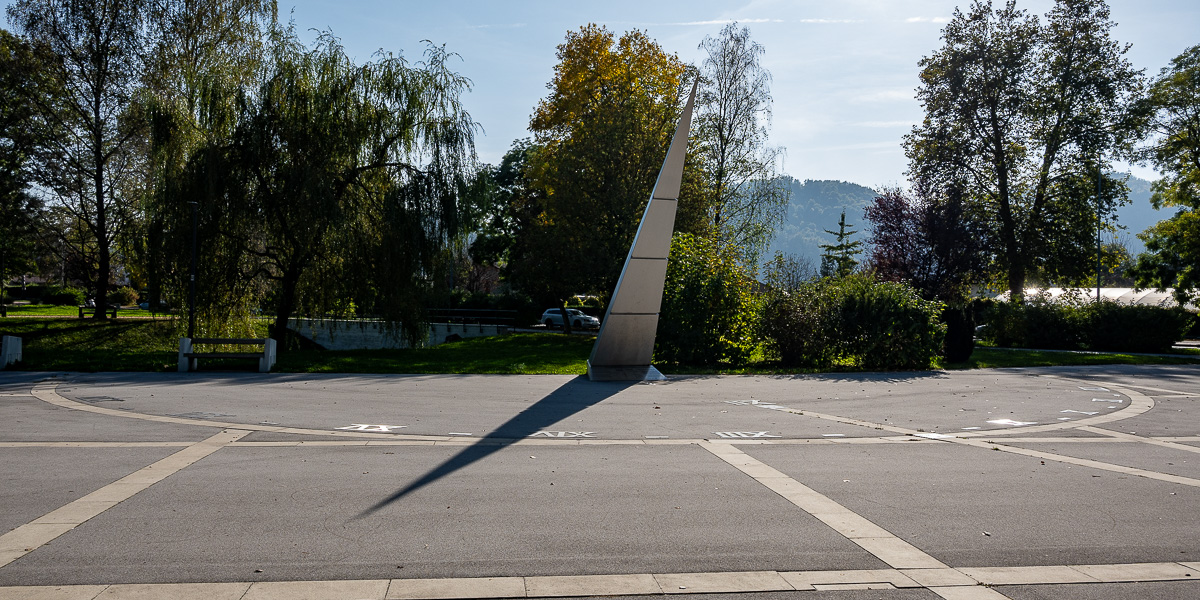
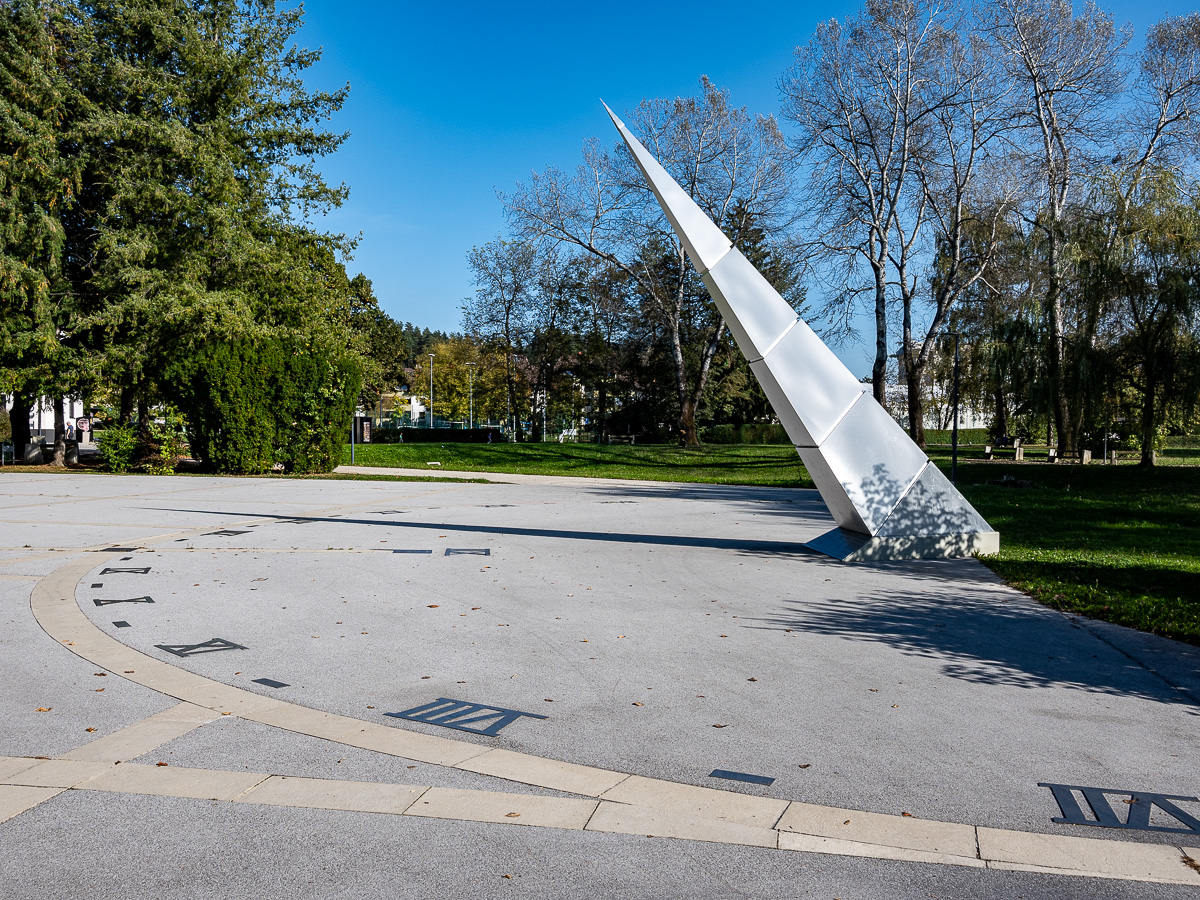 The sundial is an ancient device for displaying time. To work, it needs only the sun and a clear sky.
Astronomically speaking, it is always accurate, but it is not necessarily synchronised with the time displayed on modern clocks, phones, etc. On those, time is set uniformly for the whole country, even though in eastern Slovenia the sun reaches its highest point (zenith) 12 minutes earlier than in its west.
Each hour the sun moves 15 degrees westward across the sky. Because of the tilt of the earth's axis as the earth orbits the sun, it travels along circular paths of different heights: in summer the sun is high at its zenith, in winter low above the horizon. A vertical pointer would thus, at the same hour in different months, cast a shadow on the ground in different directions, which is why the gnomon of a sundial is inclined in the direction of the earth's axis.
The Solar Calendar
The solar calendar shows the months by the length of the gnomon's shadow. The month of the year is read at noon, when the sun is at its zenith.
The solar calendar is a flat concrete strip on which the months are marked with sheet-metal triangles. The points of the calendar nearest to and farthest from the gnomon mark the reach of the shadow when the day is shortest or longest (at the solstice). The large white semicircular strip with the dial of the sundial shows the reach of the shadow at the spring and autumn equinox, when day and night are equally long (the equinox).
On the western side of the solar calendar display are arranged the months in which the shadow and the nights grow shorter, and on the eastern side the months in which they grow longer.
Source: Velenje Municipality