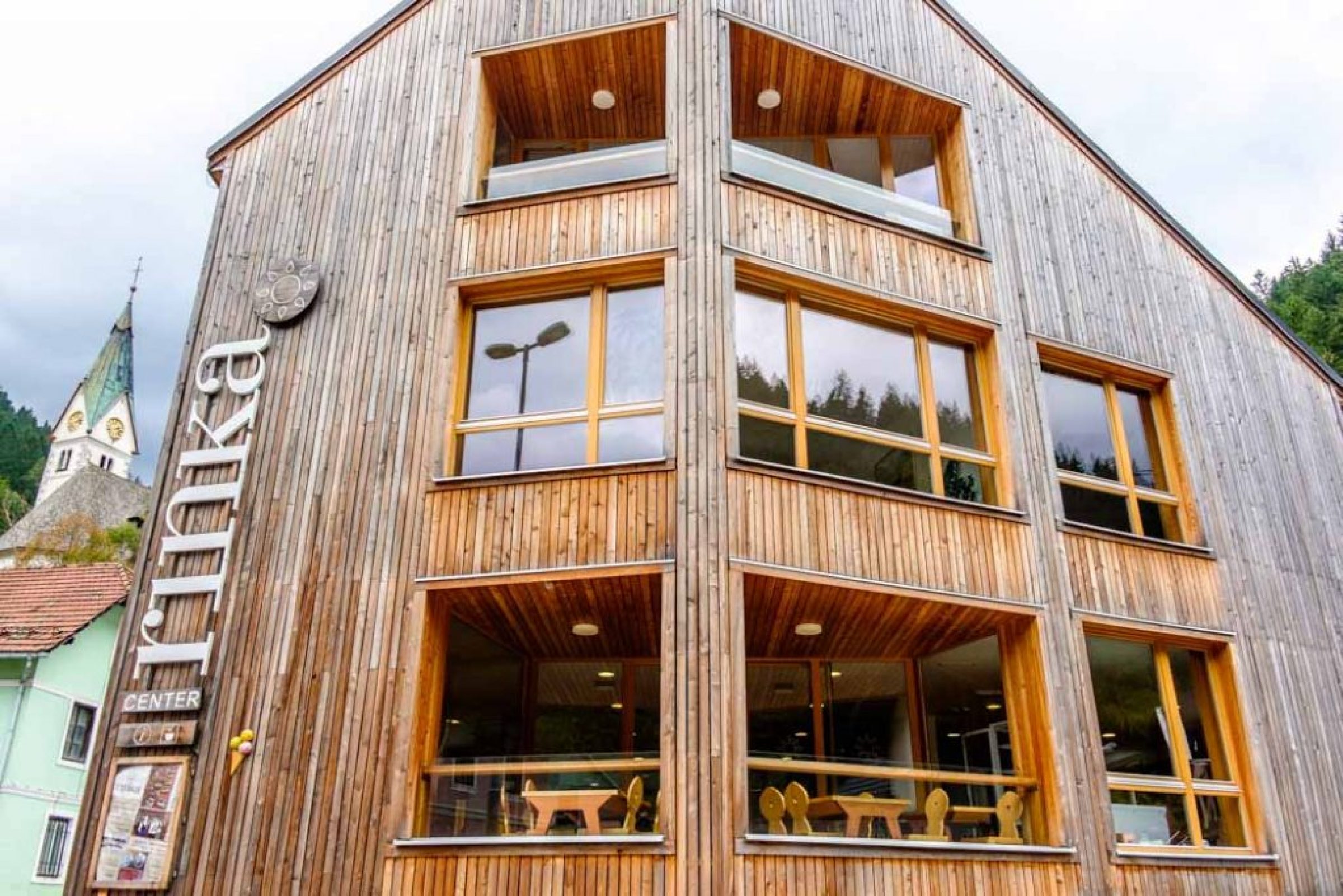
Rinka Centre
The central cell of the Rinka Centre is a multipurpose hall for multimedia presentations, lectures, training sessions, seminars, workshops, guest exhibitions or smaller cultural events.
The cycling route from Gornji Grad to Kamnik connects the Upper Savinjska Valley with the heart of the Kamnik-Savinja Alps and is considered one of the more varied Alpine cycling connections in this part of Slovenia. The route runs through the green valley of the Dreta River and crosses toward Kamniška Bistrica, where the landscape gradually opens up toward Kamnik.
It is a moderately difficult to difficult route with longer climbs and descents, rewarding you with views of Menina planina, the Alpine foothills and the Kamnik-Savinja peaks. The Kamnik area is known as one of the main starting points for cycling into the Alps and Velika planina.
The special feature of the route is its natural diversity – from the calm, forested Zadrečka Valley to the more dynamic Alpine landscape around Kamnik, where the urban and mountain environments meet.
Due to its length, elevation differences and panoramic sections, this cycling connection is an excellent choice for experienced recreational cyclists looking for an active Alpine trip between two important places.
The central cell of the Rinka Centre is a multipurpose hall for multimedia presentations, lectures, training sessions, seminars, workshops, guest exhibitions or smaller cultural events.
The Church of St. Roch is a church in the Karavanke at an altitude of 427 metres. The church is located 0.7 km north-northeast of Mozirje and 1.2 km west-northwest of Ljubija.
The Parish of Šmihel nad Mozirjem lies on a gentle slope below the Golte karst plateau above Mozirje. It encompasses the village of Šmihel, part of the villages of Radegunda and Lepa Njiva, and one house from the village of Brezje. The parish belongs to the parish association of the parishes of Mozirje, Rečica ob Savinji and Šmihel nad Mozirjem
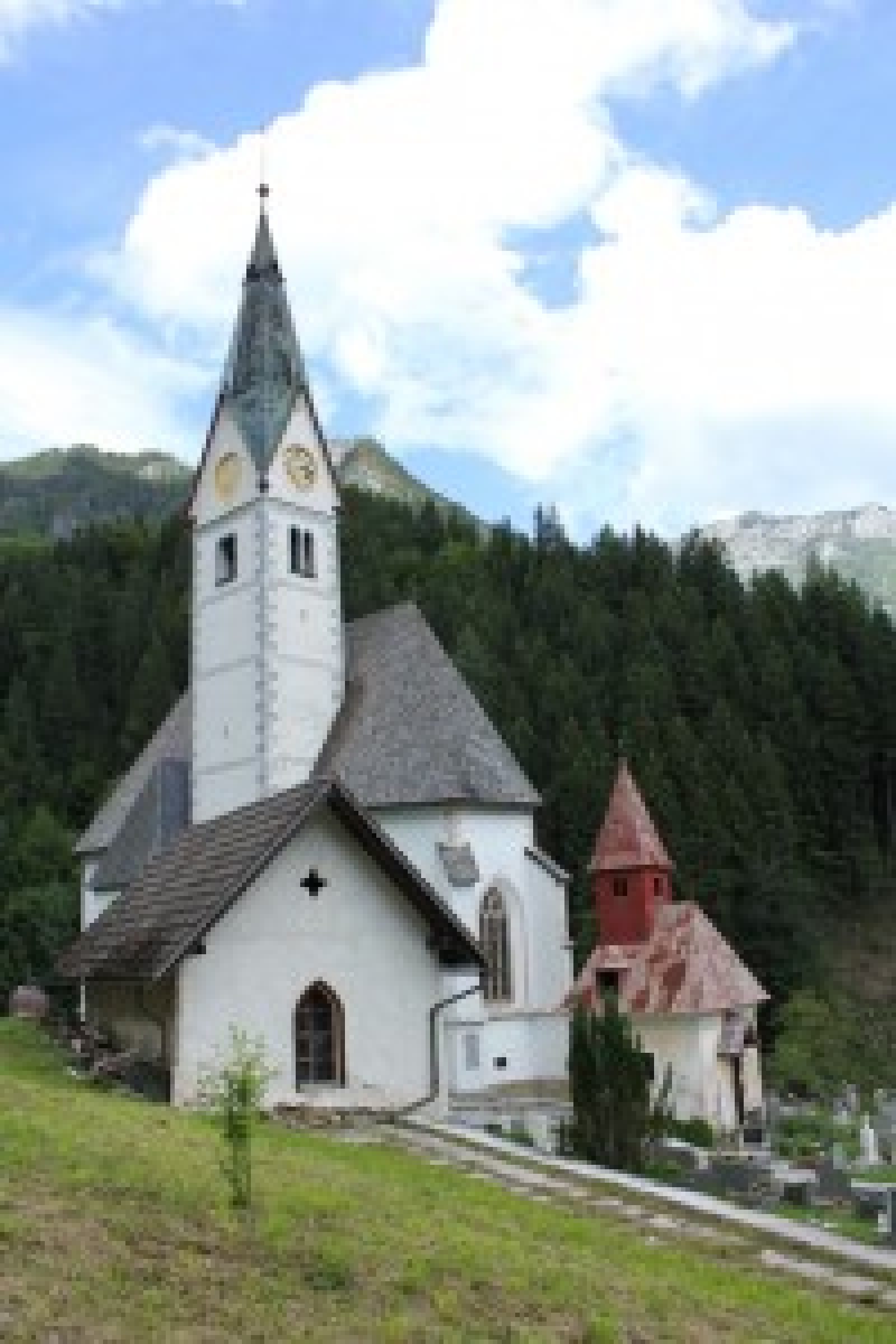
The Church of St Anthony the Hermit is a charming mountain church by the Podvolovljek Pass, surrounded by the pristine nature of the Kamnik-Savinja Alps, offering peace, scenic views and an authentic cultural heritage experience - visit it and feel the serenity of the mountain world.
The Church of St Lawrence in Luče is a picturesque central church in Luče, nestled among the alpine peaks of the Savinja Alps, which with its history, architecture and tranquil atmosphere makes a perfect stop for visitors and lovers of cultural heritage.
The Church of Our Lady of the Snows is a picturesque pilgrimage church in Solčava, known for its rich history, wonderful architecture and popularity among visitors seeking spiritual peace and views of the surrounding landscape.
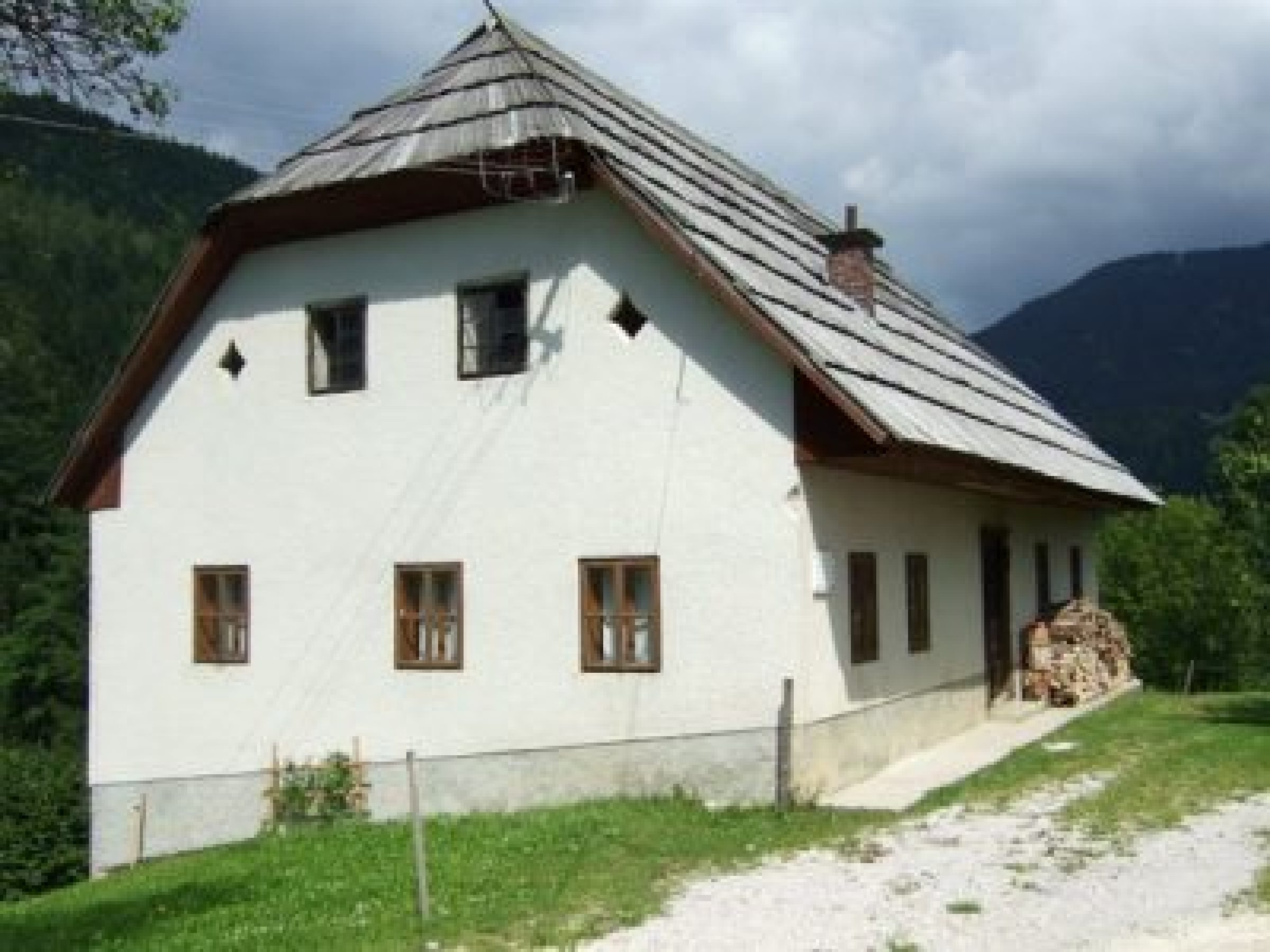
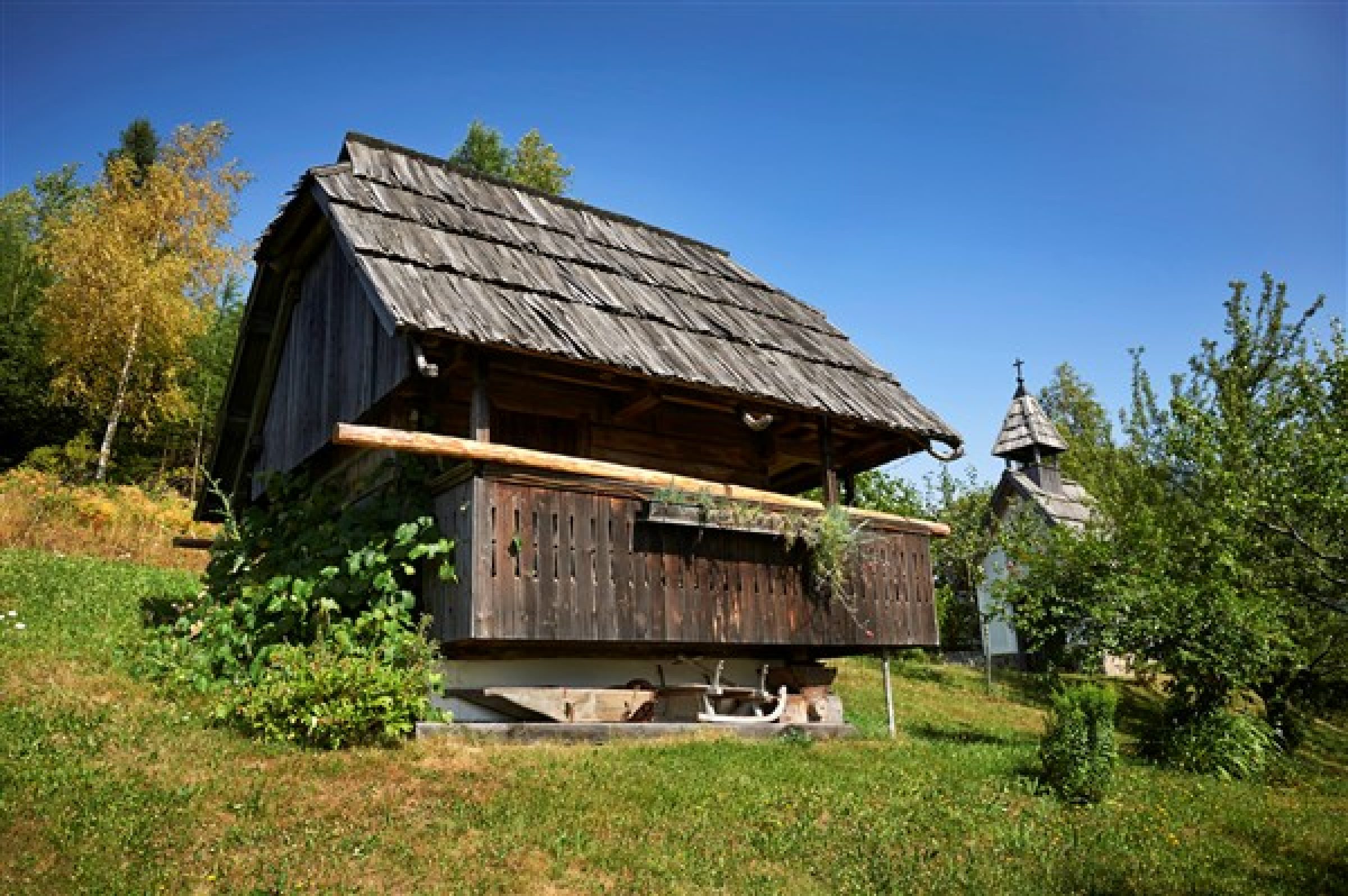
At the Koklej farm there is a collection of old and beautifully restored wooden farm buildings, which in the past were an important part of life in this area.
Family house - Holiday home - Located right next to the cycling route in the quiet settlement of Ljubija, near Mozirje. Cyclists welcome.
Mozirski gaj is a flower park and open-air ethnographic museum in Mozirje, created by Slovenian gardeners and locals in the 1980s. It arose from an overgrown market-town common where there had been illegal rubbish dumps. In this way, they transformed the desecrated land into a flower park. It lies on the right bank of the Savinja River, spreads over an area of 7 ha, and is open from mid-April to mid-October. During this time there are successive flower exhibitions, and themed gardens are also arranged, e.g. a group of aromatic herbs and medicinal plants; ethnographic buildings add further variety...
In Nazarje, at the confluence of the Savinja and Dreta rivers, stands the more than 750-year-old Vrbovec Castle with the Museum of Forestry and Timber, which depicts the life, forgotten customs and work of former foresters and woodworkers. The Savinjska Valley has rich green forests and a recognized tradition of timber management. The Solčava yew is among the oldest trees in Slovenia, while the larch at Klemenča jama is the thickest larch in the country. The knowledge associated with timber is still preserved by the locals today...